Staying strong during lung cancer
October 29, 2026
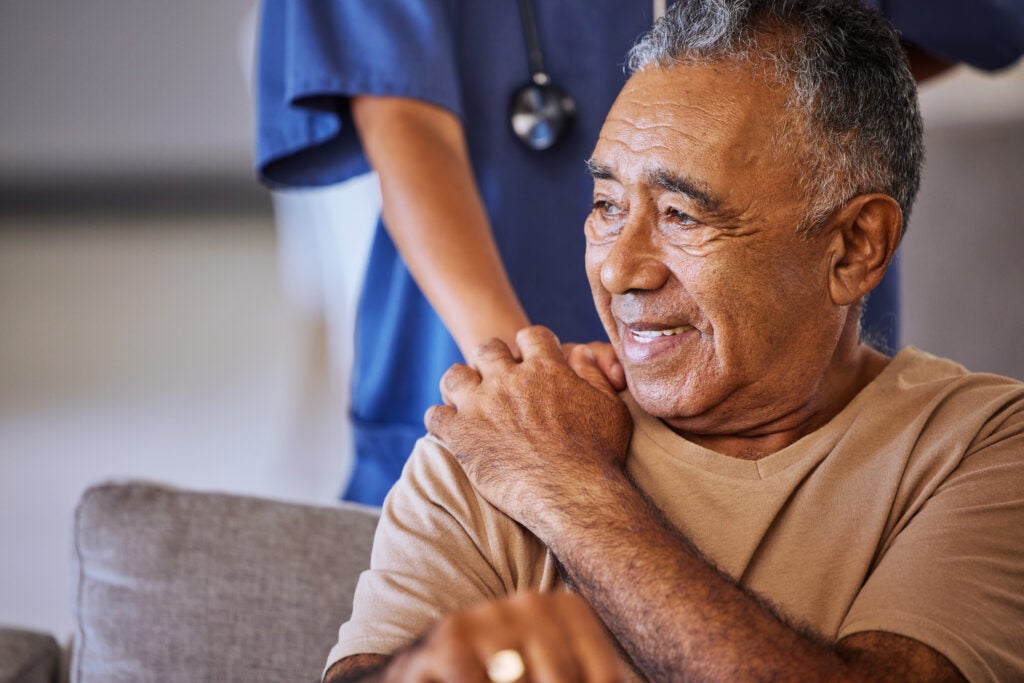
A lung cancer diagnosis brings physical, emotional, and social challenges that affect every aspect of life. Research shows that how you cope with these challenges directly influences your quality of life1, with positive coping strategies associated with better emotional wellbeing, less pain, and reduced fatigue.2 Understanding common challenges, building effective coping skills, seeking appropriate support, and maintaining hope empowers you to stay stronger through this difficult journey.
Learning you have lung cancer changes everything in an instant, leaving you facing physical symptoms, emotional distress, and uncertainty about the future. While the journey ahead is undeniably difficult, research shows that the strategies you use to cope significantly influence your quality of life and emotional wellbeing throughout this experience.1
Understanding the challenges
Lung cancer is associated with high symptom burden including fatigue, shortness of breath and pain that affect quality of life.3 Beyond physical symptoms, patients often experience substantial psychological distress including anxiety, depression, and feelings of uncertainty about the future.3 Studies examining quality of life found that both the disease itself and its treatment lead to multiple symptoms that can negatively impact physical, emotional, and social wellbeing.4
What many patients find particularly challenging is dealing with late effects of treatment such as persistent fatigue, shortness of breath, and nerve pain, especially when they weren’t aware these effects would emerge or didn’t receive guidance on managing them.5 Additionally, the stigma sometimes associated with lung cancer can create feelings of isolation and self-blame that add to the emotional burden.6
The power of coping strategies
Research examining coping strategies reveals how individuals appraise and respond to a lung cancer diagnosis significantly influences their quality of life.1 Studies show that emotional support represents the most frequently utilized coping strategy, with many patients also relying on positive reframing, acceptance, and active coping approaches.1 Importantly, positive reframing as a coping strategy correlates significantly with better overall quality of life, improved emotional wellbeing, less pain, reduced fatigue, and better appetite.2
The mechanism appears to be that positive reframing goes along with fewer anxiety and depressive symptoms, which in turn leads to better quality of life.2 This doesn’t mean forcing yourself to be unrealistically optimistic or ignoring the seriousness of your situation. Rather, it involves finding meaningful ways to view your experience, focusing on what can be controlled, and seeking positive aspects where possible while accepting the difficulty of your circumstances.7
In contrast, research found that self-blame as a coping strategy leads to more sleep problems and worse emotional wellbeing.2 This highlights why being compassionate with yourself and avoiding self-blame, particularly given the stigma sometimes associated with lung cancer, matters for your overall wellbeing.
Seeking support and connection
Finding appropriate emotional support represents a crucial element of staying strong. However, patients and families often describe this as challenging, with lack of professional counselors especially in rural settings being a significant barrier, and availability of in-person support groups for lung cancer survivors being described as “woefully lacking”.5 Accessing support through available channels, including healthcare services and online networks, can be helpful for patients and their families.5
Psychosocial interventions including cognitive-behavioral approaches, mindfulness-based stress reduction, and caregiver-assisted coping skills training have shown promise in reducing psychological distress and improving quality of life for lung cancer patients.8These structured approaches help you change your relationship to distressing thoughts, increase tolerance to difficult symptoms, and build self-competence and autonomy, all of which are associated with enhanced psychological wellbeing.
Maintaining quality of life
Addressing your overall wellbeing requires attention to multiple dimensions beyond just physical symptoms. Studies examining survivors’ experiences found that managing multiple symptoms during treatment, dealing with late effects afterward, and finding information about self-management strategies were all important concerns.5 Education about prognosis, options for support, and advances in care is essential for managing uncertainty and planning for the future.5
Palliative and supportive care services, which focus on managing symptoms and improving communication while also addressing psychosocial concerns, can significantly improve quality of life throughout the cancer experience.9,10 Complementary approaches including yoga, meditation, massage therapy, and art or music therapy offer additional ways to support emotional wellbeing and manage stress.10 These services are not limited to end-of-life care but can benefit patients across the survivorship trajectory, with early and proactive integration helping address the complex needs that arise over time.9
This article was written with the assistance of generative AI technology and reviewed for accuracy.
Conclusion
Staying strong during lung cancer involves more than just enduring physical symptoms. It requires actively engaging with effective coping strategies, seeking appropriate support, and maintaining attention to your overall quality of life. Research clearly demonstrates that positive reframing and acceptance-based coping strategies correlate with better emotional wellbeing, less pain, reduced fatigue, and improved overall quality of life.2 Conversely, self-blame leads to worse outcomes,2 emphasizing the importance of self-compassion during this difficult time. While finding adequate support can be challenging, especially for those in rural areas, seeking connection through healthcare teams, online communities, family, and friends makes a meaningful difference. Don’t hesitate to ask your care team about palliative and supportive care services, which address symptom management and emotional concerns at any stage. Remember that education about your condition, available support options, and self-management strategies helps reduce uncertainty and enhances your sense of control.5 Staying strong doesn’t mean being perfect or never feeling distressed. It means actively engaging with resources, building effective coping skills, seeking support when needed, and finding ways to maintain meaning and quality of life throughout your journey.
FAQ
Q: How can I cope emotionally with my lung cancer diagnosis?
A: Research shows that emotional support is the most commonly used coping strategy,1 and positive reframing is associated with better quality of life, less pain, reduced fatigue, and improved emotional wellbeing.2 This doesn’t mean forcing unrealistic optimism but rather finding meaningful ways to view your experience, focusing on what you can control, and seeking positive aspects while accepting the difficulty.7 Avoid self-blame, as this leads to worse sleep and emotional wellbeing. Seek support through your healthcare team, support groups (including online options), counseling, or trusted family and friends. Ask about palliative and supportive care services that address emotional concerns alongside physical symptoms.
Q: Will I ever feel normal again after lung cancer treatment?
A: Many survivors describe working toward a “new normal” rather than returning to exactly how things were before. Late effects including fatigue, shortness of breath, and nerve pain can persist after treatment, which frustrates many patients who weren’t aware these would emerge.5 Understanding that these effects are common and learning self-management strategies helps. Quality of life can improve significantly over time, though some symptoms may persist. Focus on what brings you meaning and joy, gradually increase activity as able, and maintain open communication with your healthcare team about ongoing symptoms that affect your daily functioning.
Q: How do I find support when I feel so alone with lung cancer?
A: Finding adequate support can be challenging, especially in rural areas where professional counselors and in-person support groups may be limited. Start by talking with your healthcare team about available resources including palliative care services, social workers, and patient navigators. Online support communities and social media groups offer connection when local options are limited.5 Ask about complementary therapies like meditation, yoga, or art therapy that some cancer centers offer. Don’t hesitate to lean on family and friends, letting them know specific ways they can help. Remember that seeking support is a sign of strength, not weakness.
Q: What should I prioritize to maintain the best possible quality of life?
A: Focus on multiple dimensions of wellbeing, not just physical symptoms. Manage symptoms proactively by reporting them to your care team rather than assuming nothing can help. Seek education about your condition, treatment options, and self-management strategies to reduce uncertainty.5 Build effective coping skills through counseling, mindfulness, or structured coping programs if available. Maintain social connections and activities that bring meaning and joy where possible. Address emotional concerns through support and possibly counseling. Ask about palliative and supportive care services at any stage, not just at end of life. Remember that small improvements in multiple areas often contribute more to overall quality of life than focusing only on one aspect.
References
- Nipp RD, El-Jawahri A, Fishbein JN, et al. The relationship between coping strategies, quality of life, and mood in patients with incurable cancer. Cancer. 2016;122(13):2110-2116.
- van de Wiel M, Derijcke S, Galdermans D, et al. Coping Strategy Influences Quality of Life in Patients With Advanced Lung Cancer by Mediating Mood. Clin Lung Cancer. 2021;22(2):e146-e152.
- Lehto RH. Symptom burden in lung cancer: management updates. Lung Cancer Manag. 2016;5(2):61-78.
- Prapa P, Papathanasiou IV, Bakalis V, Malli F, Papagiannis D, Fradelos EC. Quality of Life and Psychological Distress of Lung Cancer Patients Undergoing Chemotherapy. World J Oncol. 2021;12(2-3):61-66.
- Fitch MI. Exploring Experiences of Survivors and Caregivers Regarding Lung Cancer Diagnosis, Treatment, and Survivorship. J Patient Exp. 2020;7(2):193-199.
- Chambers SK, Morris BA, Clutton S, et al. Psychological wellness and health-related stigma: a pilot study of an acceptance-focused cognitive behavioural intervention for people with lung cancer. Eur J Cancer Care (Engl). 2015;24(1):60-70.
- Laidsaar-Powell R, Butow P, Brown BB, et al. Application of a revised model for coping with advanced cancer to qualitatively explore lung cancer survivors’ experiences of ongoing physical effects, novel treatments, uncertainty, and coping. J Cancer Surviv. 2024;18(6):1754-1770.
- Lehto RH. Psychosocial challenges for patients with advanced lung cancer: interventions to improve well-being. Lung Cancer (Auckl). 2017;8:79-90.
- Presley CJ, Gomes F, Bhatia S, et al. Survivorship in advanced lung cancer: understanding a new patient population. Am Soc Clin Oncol Educ Book. 2024;44(3):e433298.
- Cleveland Clinic. Resilience Matters: Mental Wellness Tied to Higher Immunotherapy Success in Advanced Non‑Small Cell Lung Cancer. Published August 12, 2025. Accessed February 11, 2026. https://consultqd.clevelandclinic.org/resilience-matters-mental-wellness-tied-to-higher-immunotherapy-success-in-advanced-non-small-cell-lung-cancer